
第6回専門グループ勉強会を開催しました!
腰椎分離症の概要と最新の知見-正しく見極め、早期の競技復帰と予防へ-
はじめに
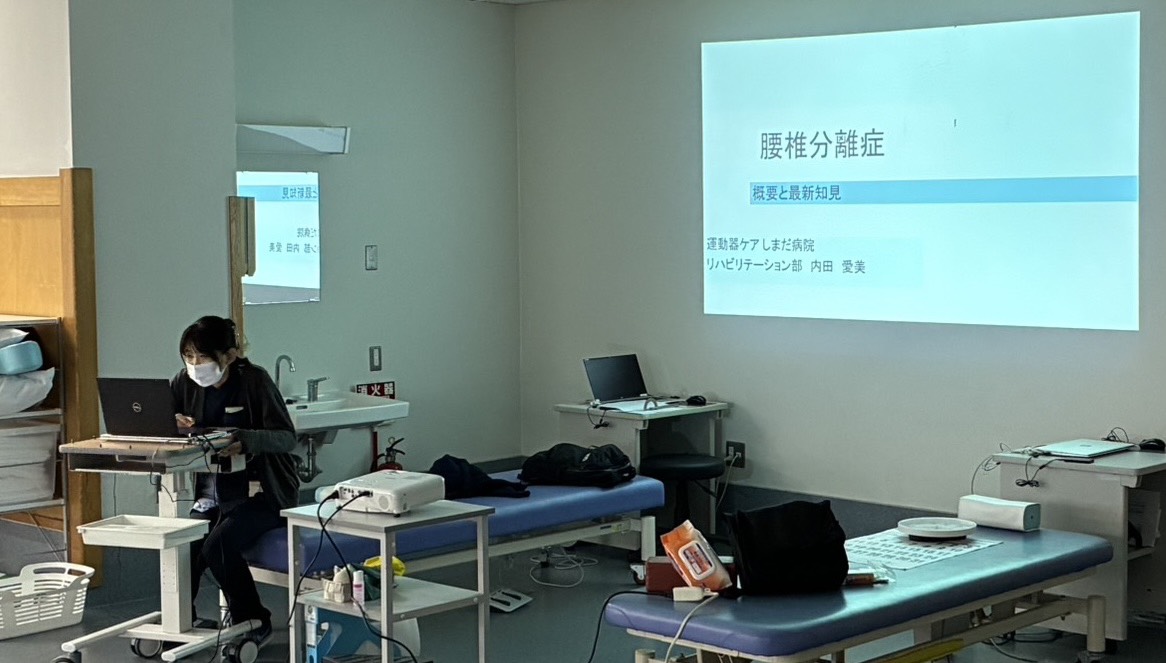
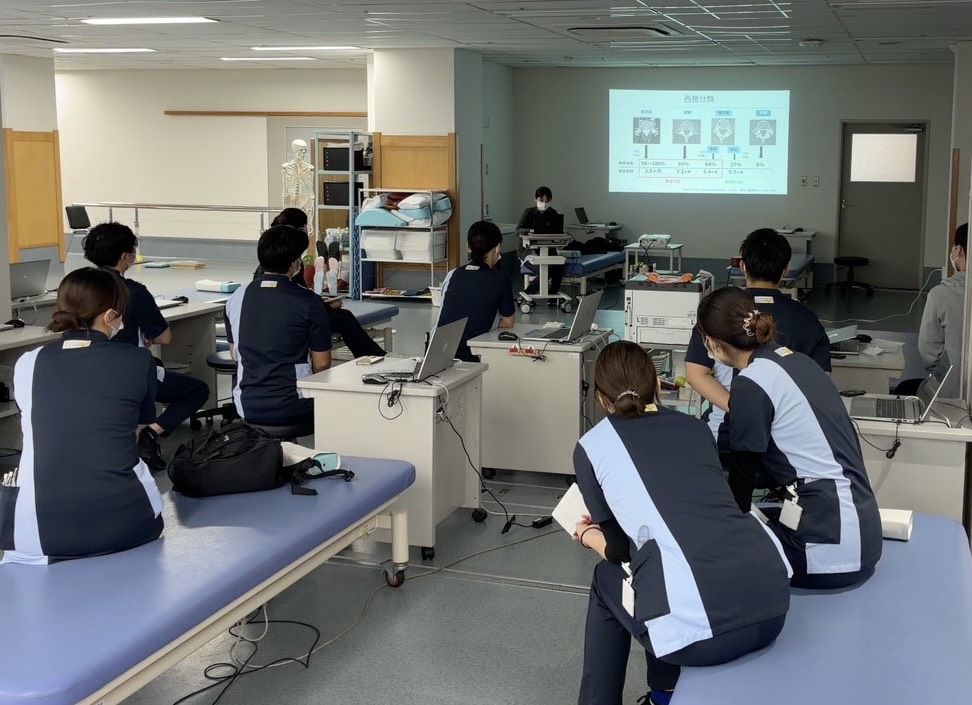
運動器ケア しまだ病院では、理学療法士が定期的に集まり、知識と技術をアップデートするための専門グループ勉強会を実施しています。
今回は、「腰椎分離症の評価・治療と最新の知見」をテーマに、成長期のスポーツ選手に多くみられる腰椎分離症について、病態の理解から最新の評価方法、早期発見・リハビリテーションの実際について学びました。
当日の様子:発症メカニズムと病期のステージ把握
今回の勉強会では、腰椎分離症の発症メカニズムや、レントゲンやMRIなどの画像所見の読み解き方について深く掘り下げました。
腰椎分離症は、主に伸展(身体を反る)や回旋動作(身体を捻る)の繰り返しにより、腰椎の椎弓(うしろの部分)に疲労骨折が生じる疾患です。成長期のスポーツ障害として特に注意が必要です。発症後の疼痛改善のみではなく、発症メカニズムを知り、再発骨折や再腰痛の出現を予防することまでがリハビリテーションの目的になります。
勉強会では、発症メカニズムについて、また病期によって治療方針が異なることから、画像所見の読み方についても学びました。
「腰の痛み」=様子見は禁物です
「スポーツの最中に腰が痛い」「腰を反らすと痛む」という症状は、成長期の選手からよく聞かれる訴えの一つです。
初期の段階では、レントゲン写真には異常が写りにくいこともあり、「ただの筋肉の疲れ(腰痛症)」として見過ごされてしまうケースも少なくありません。しかし、この段階で適切な休や評価を行わないまま運動を継続してしまうと、骨が癒合しにくい「偽関節(分離したままの状態)」へ移行してしまうリスクが高まります。
そのため、
・「いつから、どの動きで腰が痛むのか」
・「特定のスポーツ動作や姿勢で痛みが強まるか」
・「腰椎のどの部位に負担がかかっているのか」
を一つひとつ丁寧に評価し、見極めることが大切です。
おわりに
今回の勉強会を通じて、腰椎分離症をより細かく評価し、病期のステージや一人ひとりの身体的特徴に合わせた治療・リハビリテーションへとつなげるための知識と技術を深めました。
運動器ケア しまだ病院では、患者さんやスポーツを頑張る子どもたちが一日も早く安全に日常や競技に復帰できるよう、スタッフ一同、質の高い臨床実践に向けた研鑽を続けてまいります。
The 6th Specialized Study Group Session
Overview and Latest Insights on Lumbar Spondylolysis: Accurate Diagnosis for Early Return to Sports and Prevention
Introduction
At Shimada Hospital for Orthopedic and Musculoskeletal Care, our physical therapists regularly gather for specialized study group sessions to update their clinical knowledge and technical skills.
In our latest session, centered on the theme “Assessment, Treatment, and the Latest Insights on Lumbar Spondylolysis,” we covered everything from understanding the underlying condition to modern evaluation techniques, early detection, and practical rehabilitation strategies for lumbar spondylolysis—a condition frequently seen in growing young athletes.
Session Recap: Understanding the Mechanism and Identifying Disease Stages
This session took a deep dive into the underlying mechanisms of lumbar spondylolysis and how to interpret diagnostic imaging, such as X-rays and MRIs.
Lumbar spondylolysis is a stress fracture of the vertebral arch (the back portion of the lumbar spine), mainly caused by repetitive extension (bending backward) and rotation (twisting) movements. It requires special attention as a sports injury in growing young athletes. The ultimate goal of rehabilitation goes beyond simply relieving pain after onset; it involves understanding the mechanism of the injury to prevent recurring fractures and chronic lower back pain.
During the session, we also focused on reading diagnostic images, as treatment approaches vary depending on the stage of the condition.
Don’t Ignore Back Pain: Why a “Wait-and-See” Approach Can Be Dangerous
“My back hurts during sports” or “It hurts when I bend backward”—these are common complaints from growing athletes.
In the early stages, abnormalities rarely show up clearly on standard X-rays, so the condition is often misdiagnosed as simple muscle fatigue (general lower back pain). However, if an athlete continues playing without proper rest and medical evaluation at this stage, the risk of developing a nonunion—where the bone fails to heal and remains separated—increases significantly.
For this reason, it is crucial to carefully evaluate and identify key factors such as:
-
When the pain started and which specific movements trigger it
-
Whether the pain worsens during particular sports movements or postures
-
Which specific area of the lumbar spine is bearing the load
In Conclusion
Through this study session, our team deepened its knowledge and technical expertise in evaluating lumbar spondylolysis in detail, allowing us to deliver targeted treatment and rehabilitation tailored to each patient’s specific stage and individual physical characteristics.
At Shimada Hospital for Orthopedic and Musculoskeletal Care, our entire staff remains dedicated to refining our clinical practice to help patients and young athletes return to daily life and sports safely as quickly as possible.

