
第5回専門グループ勉強会 「ひざ内側部痛の評価・治療」
-ひざの「内側の痛み」を正しく見極める-
はじめに
運動器ケア しまだ病院では、理学療法士が定期的に集まり、知識と技術をアップデートするための勉強会を実施しています。
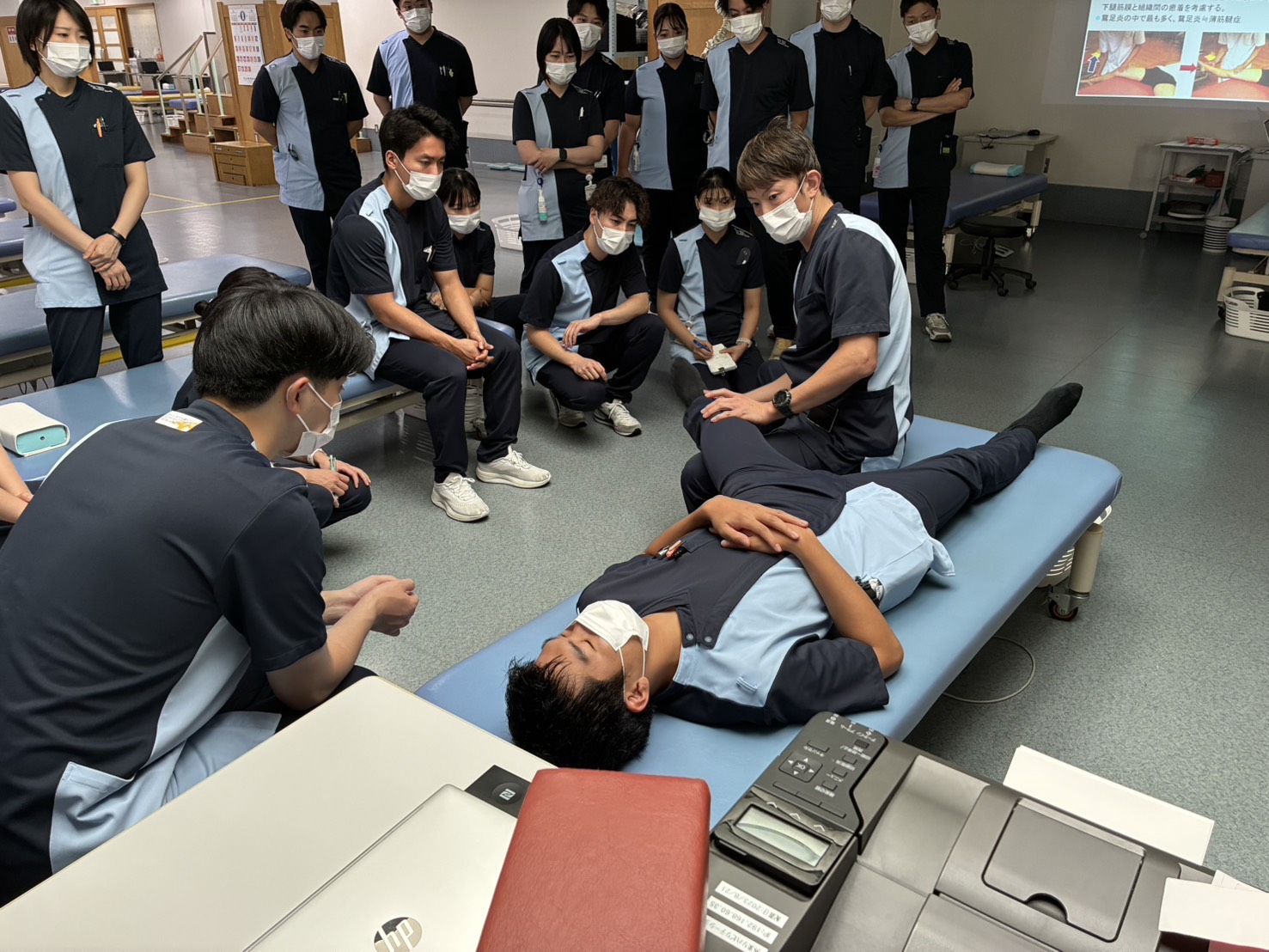
今回は、「第5回専門グループ勉強会」として、「膝内側部痛の評価・治療」をテーマに、膝の内側に生じる痛みについて、評価方法や徒手療法の実技を中心に学び合いました。
当日の様子:ひざの内側を丁寧に評価する
今回の勉強会では、変形性膝関節症やスポーツ傷害に伴って生じることのある膝内側部の痛みに着目しました。
ひざの内側には、さまざまな組織が近接して存在しています。
例えば、鵞足(がそく)、半膜様筋腱、内側側副靱帯(MCL)、伏在神経などです。
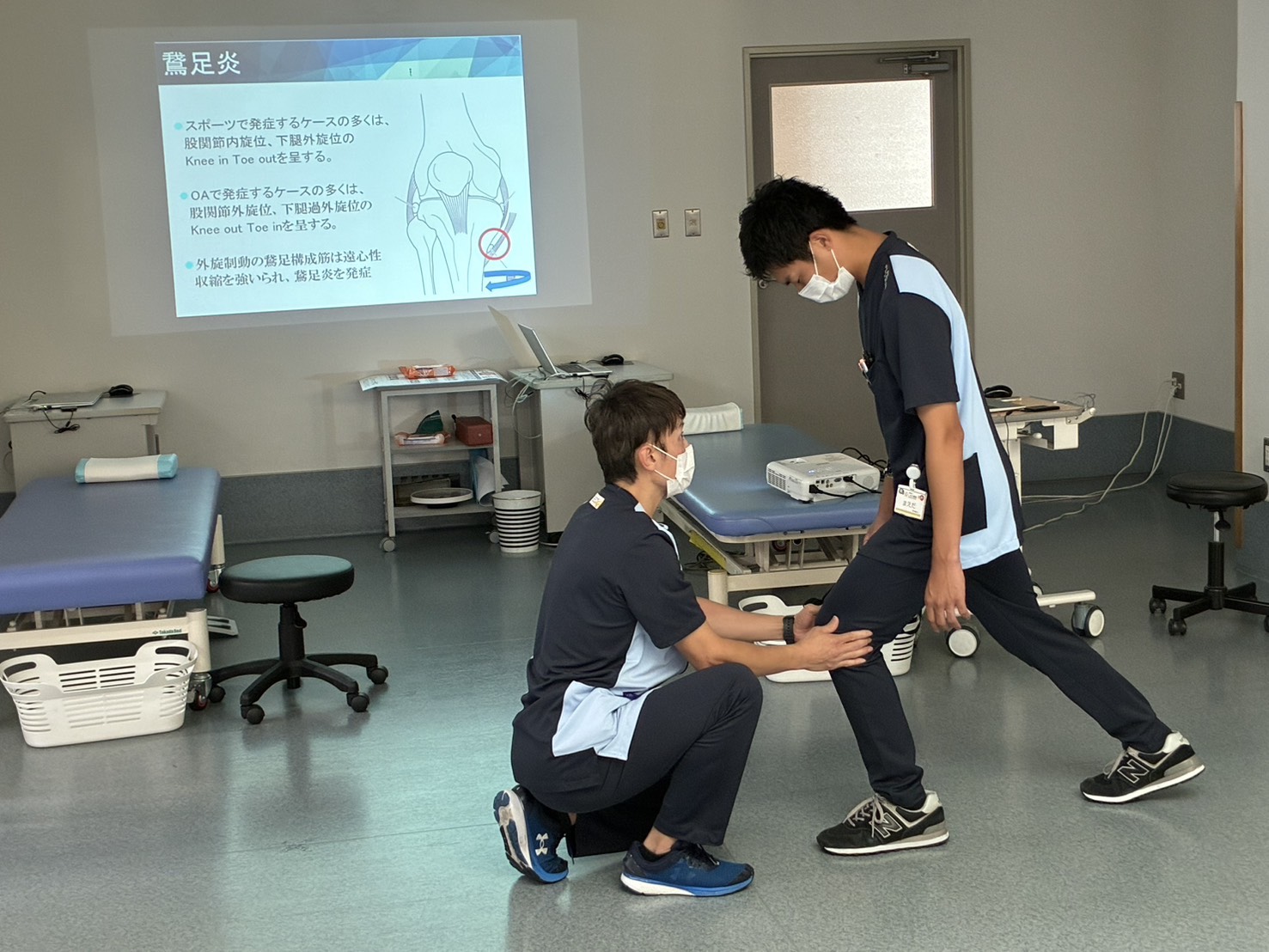
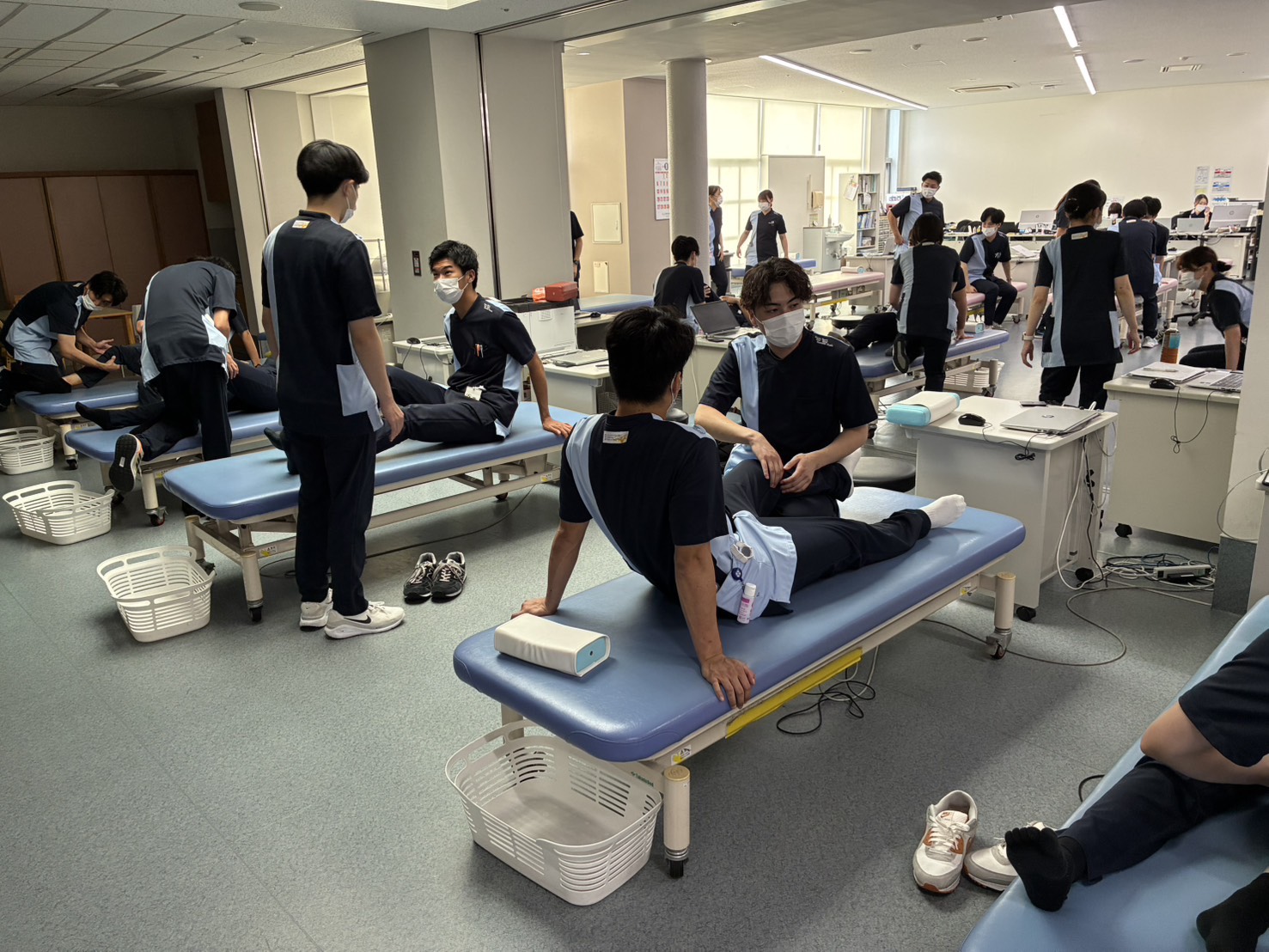
これらはそれぞれ位置や役割が異なるため、同じ「ひざの内側の痛み」であっても、どの組織が痛みに関係しているのかを見極めることが重要です。勉強会では、実際にスタッフ同士で触診を行いながら、それぞれの組織を確認する方法や、動作・圧痛・関節の動きなどから痛みの原因を考える評価方法について実技形式で学びました。
「ひざの内側が痛い」=すべて同じではありません
「ひざの内側が痛い」という症状は、患者さんからよく聞かれる訴えの一つです。
特に変形性膝関節症やスポーツ傷害膝では、膝関節そのものだけでなく、その周囲にある筋肉や腱、靱帯、神経などが痛みに関係していることがあります。
そのため、単に「ひざが変形しているから痛い」と考えるのではなく、
「どこが痛いのか」「どの動きで痛むのか」「どの組織に負担がかかっているのか」
を一つひとつ確認していくことが大切です。
例えば、ひざの内側でも、痛む場所や押したときの反応、ひざを動かしたときの症状などによって、考えられる原因は変わってきます。
評価から治療へ-徒手療法技術
今回の勉強会では、評価だけでなく、実際の治療につなげるための徒手療法についても実技を行いました。
対象となる組織の状態を確認したうえで、筋肉や腱、靱帯周囲などに対して適切な徒手的アプローチを行い、
痛みや動きの変化を確認しました。
大切なことは、評価によって得られた情報をもとに、どの組織に、どのような負担がかかっているのかを考えること。
そして、治療後に症状や動きがどのように変化したのかを再度確認し、その結果を運動療法につなげていくことです。
今回の勉強会では、ひざ内側部痛をより細かく評価し、一人ひとりの症状に合わせた治療につなげるための知識と技術を、
質の高い臨床実践のために学びました。
5th Specialist Group Study SessionAssessment and Treatment of Medial Knee Pain: Accurately Identifying the Root Cause
Introduction
At our clinic, our physical therapists gather regularly for study sessions to keep our knowledge and hands-on skills up to date.
For our 5th Specialist Group Study Session, we focused on the topic of “Assessment and Treatment of Medial Knee Pain.” Together, we explored how to evaluate pain on the inner side of the knee through practical, hands-on training centered on physical assessment and manual therapy techniques.
On the Day: Precision Assessment of Inner Knee Pain
In this session, we turned our focus to inner knee pain, which frequently accompanies conditions like knee osteoarthritis and sports-related injuries.
The inner (medial) aspect of the knee is home to several closely neighboring structures, including:
-
The pes anserinus (goose’s foot)
-
The semimembranosus tendon
-
The medial collateral ligament (MCL)
-
The saphenous nerve
Because each of these structures serves a different role and occupies a distinct position, identifying precisely which tissue is involved is essential—even when two patients report the exact same “inner knee pain.”
During the workshop, our staff paired up for practical palpation training. We practiced pinpointing each structure and performed hands-on evaluations based on movement patterns, localized tenderness, and joint mechanics to accurately determine the underlying source of pain.
“Inner Knee Pain” Is Not One-Size-Fits-All
Pain on the inner side of the knee is one of the most common complaints we hear from patients.
Especially in cases of knee osteoarthritis or sports injuries, the pain isn’t always caused solely by the knee joint itself. Surrounding muscles, tendons, ligaments, and nerves often play a major role.
That is why we never simply assume “it hurts because the joint is worn down.” Instead, we meticulously check:
-
Where exactly does it hurt?
-
Which movements trigger the pain?
-
Which specific tissue is under stress?
Even within the inner side of the knee, the suspected cause can vary greatly depending on the exact location of the pain, the response to pressure, and how symptoms change with movement.
From Assessment to Treatment: Manual Therapy Techniques
Beyond assessment, this study session included practical training in manual therapy to seamlessly connect diagnosis to treatment.
After determining the condition of the targeted tissue, staff practiced applying precise manual interventions to the surrounding muscles, tendons, and ligaments, assessing the immediate changes in pain levels and mobility.
The key takeaway was the importance of using assessment data to understand what tissue is under stress and how. From there, reassessing symptoms and range of motion post-treatment allows us to build an effective, tailored exercise therapy plan.
Conclusion
Through this study session on medial knee pain, our team gained deeper clinical insights and refined technical skills. We remain committed to providing high-quality, personalized care tailored to each patient’s unique needs.

