
第4回専門グループ勉強会 尺骨神経に対するアプローチ
今日も療法士が真剣なまなざしで知識と技術を高めています!
はじめに
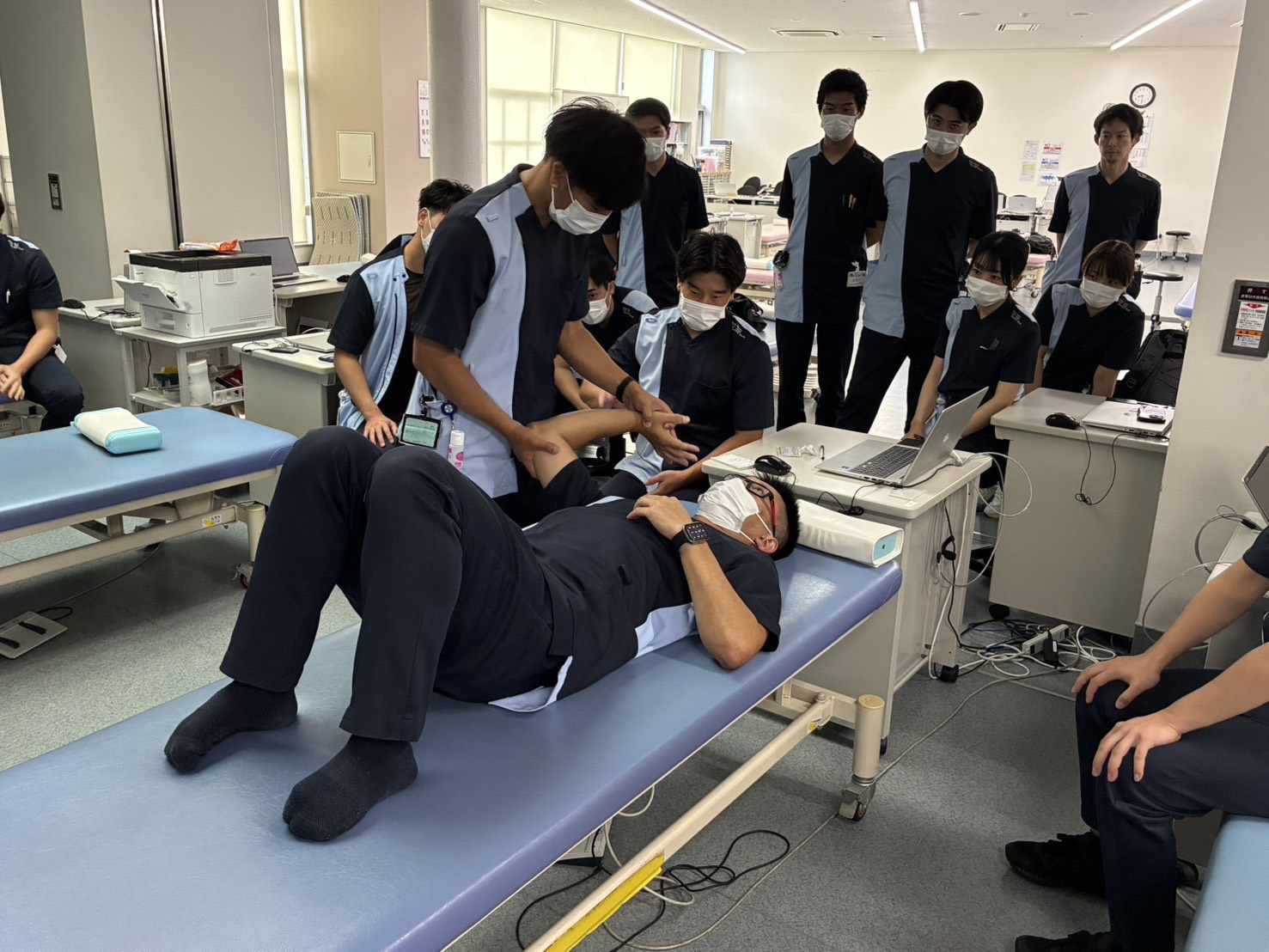
当院では、理学療法士が定期的に集まり、知識と技術をアップデートするための院内勉強会を実施しています。今回は、先日実施した「第4回専門グループ勉強会」の様子を紹介します。今回の勉強会では、末梢神経(尺骨神経)に対するアプローチについて学び合いました。
痛みの中には筋肉や骨、靱帯だけでなく、神経による痛みも隠れている
投球障害肘では肘の内側に痛みが生じることが多く、それは靱帯や骨の痛みと考えられることが多いですが、神経由来の痛みを見逃していることも多々あります。今回は尺骨神経に着目し、神経由来の筋力低下やエコーを用いた評価方法について実技を交えて実施しました。
神経に対するアプローチ方法を学ぶ
固まっている筋肉にはストレッチやマッサージをしたりしますが、神経には圧変動操作や伸張・弛緩操作といった神経の絞扼を緩和するアプローチ方法があり、これも実技を交えて実施しました。
臨床推論の質を向上させる
全身的なアプローチとより細かなアプローチを合わせることで、臨床推論(患者さんの症状の原因を論理的に考え、治療方針を導き出す過程)の質が高まり、より良いリハビリテーションを提供できます。今回の勉強会で得た気づきを日々の臨床にしっかりと還元できるよう、リハビリテーション部一同、今後も質の高い勉強会を行っていきたいと思います。
4th Specialized Group Study Session: “Approaches to the Ulnar Nerve”
Introduction
At our clinic, physical therapists regularly gather for internal study sessions to update our knowledge and skills. Today, we would like to share the highlights of our recent “4th Specialized Group Study Session,” which focused on clinical approaches to peripheral nerves—specifically, the ulnar nerve.
Looking Beyond Muscles, Bones, and Ligaments: Nerve-Related Pain
In throwing-related elbow injuries, pain frequently occurs on the inner side of the elbow. While this is often assumed to be an issue with ligaments or bones, nerve-derived pain is frequently overlooked. In this session, we focused on the ulnar nerve, practicing evaluation methods for nerve-related muscle weakness and utilizing ultrasound (echography) through hands-on practice.
Learning Specific Approaches for Nerves
While tight muscles are typically treated with stretching or massage, nerves require specialized techniques to relieve nerve entrapment, such as pressure fluctuation maneuvers and tension/relaxation techniques. We practiced these approaches through hands-on training as well.
Enhancing the Quality of Clinical Reasoning
By combining global (system-wide) approaches with more detailed, localized interventions, we can elevate the quality of our clinical reasoning—the process of logically identifying the root cause of a patient’s symptoms and guiding effective treatment strategies—ultimately leading to better rehabilitation outcomes.
The Rehabilitation Department remains committed to holding high-quality study sessions so that we can firmly apply the insights gained today to our daily clinical practice.

